Dylan’s Nobel Prize Lecture
Bob Dylan ruffled feathers in Oslo last October by skipping the Nobel Prize ceremony, sending a written statement instead. He left it to rock poet Patti Smith to deliver a memorable rendition of his song “A Hard Rain’s a-Gonna Fall” to the assembled dignitaries. But his Nobel Prize Lecture, submitted on June 6th, makes amends for any perceived slight. It comes as a 27-minute audio recording, complete with tinkling piano accompaniment. Dylan asks himself just what his songs have to do with literature. He tells anecdotes about early musical influences, Buddy Holly and Leadbelly, and describes how he explored “the devices, the techniques, the secrets, the mysteries” of the vast trove of American folk music which formed the basis of his songwriting. He then turns to literature, citing novels read in school, the themes of which “worked their way into many of my songs, either knowingly or unintentionally.” What follows is a fascinating retelling of the events, characters, and feel of Melville’s Moby Dick, Remarque’s anti-war classic, All Quiet on the Western Front, and Homer’s The Odyssey. Dylan concludes with a reminder that “lyrics in songs are meant to be sung, not read on a page.” Listen to the lecture here.
Cash family condemns racist violence
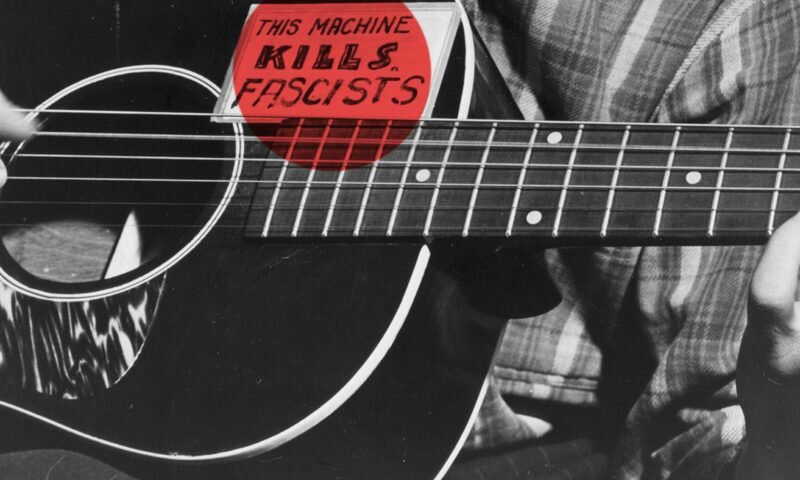
The children of American country music star Johnny Cash have condemned the action of a Charlottesville, Virginia white-supremacist who wore a t-shirt bearing the singer’s face, saying their father would have been sickened by the sight. The family’s statement was posted on Facebook on August 16 by Cash’s daughter, singer-songwriter Rosanne Cash. The image of Cash on a racist’s t-shirt circulated widely on YouTube in the aftermath of fascist torchlight parades and street violence in Charlottesville on August 11-12. The far-right’s fury culminated in the killing of Heather Heyer, a 32-year-old paralegal, and the injuring of 19 other anti-fascists. James Alex Fields, 20, a Nazi sympathizer, was charged with second-degree murder after ramming his car into the crowd. “Johnny Cash was a man whose heart beat with the rhythm of love and social justice”, the family statement says. “The white supremacists and neo-Nazis who marched in Charlottesville are poison in our society, and an insult to every American hero who wore a uniform to fight the Nazis in WWII”. Johnny Cash, who died in 2003, opposed the Vietnam war, championed indigenous peoples’ rights, spoke out against against antisemitism, and was a prominent advocate for prisoners’ rights.